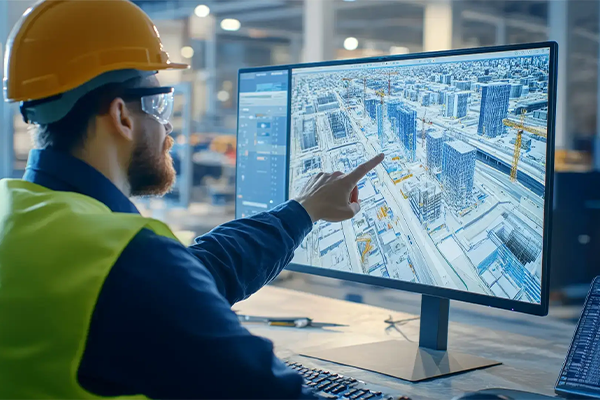
Today's construction projects involve much more than design and execution. For success to be achieved, a variety of professionals need to coordinate seamlessly. A successful construction project is created by a network of architects, structural engineers, contractors, manufacturers, and stakeholders working together to achieve a common goal. Disconnected teams lead to delays, rework, and expensive site problems on even the best-designed construction projects. Hence, BIM coordination is a vital component of project success.
Read More Read MoreGenesis Infoserve offers a complete set of BIM coordination services to help project teams integrate building systems, facilitate communication, and develop an integrated construction workflow. Our team focuses on establishing that every discipline is using and sharing coordinated project data so that conflicts are minimized and overall project efficiency is maximized.
By bringing together architecture, structure, and MEP systems into one collaborative digital environment, we give our clients the confidence and control they need to advance their projects in a timely manner.
The construction industry faces many difficulties in working with a common set of documents and information among all project team members. This is due to the fact that construction activities, including but not limited to engineering and design revisions, are constantly changing and evolving.
To address this issue, we provide BIM (Building Information Model) coordination services to give project teams a single-source workflow for validating, reviewing, and using the documented and electronically stored project data in an easily accessible, shared digital platform. By using a coordinated workflow, the project team can also create improved project visibility that helps lessen misunderstandings between team members.
The use of multiple non-connected files and drawings by stakeholders has been replaced with coordinated project models that empower team members to make informed decisions on their work throughout the complete lifecycle of the project.
Construction problems are easier to fix and cost less to resolve at the design stage than at the build-out stage. However, many of these conflicts are not discovered until the installation process begins, causing delays and added costs.
Genesis Infoserve advanced BIM coordination to detect and resolve potential conflicts before they affect construction operations. By digitally reviewing systems interaction, project teams can assess the design conditions and make necessary changes at the beginning of the project.
The benefits of this proactive strategy are:
As a result, there is a more seamless transition from design to construction.
The successful integration of multiple disciplines is essential to all modern building construction. The architectural layout of each building must be directly related to the structural system of that building. Additionally, when designing mechanical, electrical, and plumbing (MEP) systems, it is important to ensure that those systems fit within the space constraints of the building without affecting the overall performance of the building.
The coordination of the Building Information Modeling (BIM) process is to create a harmonious relationship between these systems through the coordinated development and review of the disciplines of each project in a shared project environment.
For example, by connecting all project information across disciplines, BIM project coordination improves:
This method of working together leads to more efficient and constructive project solutions.
Today's swiftly progressing projects often happen via a compressed schedule, which does not provide project teams much opportunity to avoid coordination errors throughout their respective projects. Therefore, fast-track construction requires a high level of collaboration and organization within each project workflow for immediate decision-making by the involved construction professionals.
We offer construction teams digital models of their projects in an effort to provide a means through which all stakeholders working on a fast-tracked project can better communicate regarding any identified concerns prior to issues arising that would severely impact the performance of a project.
By providing construction professionals with improved visibility into how each discipline interacts with the others, BIM coordination enhances overall project planning and ultimately supports more successful implementation of accelerated construction schedules.
Your project can be managed in many different places; construction-related projects often include docs, emails, drawings, and schedules in addition to the various tools used to create them. When these elements are not integrated properly, it can lead to confusion and miscommunication between teams, as well as inconsistency between deliverables.
Our BIM Coordination Service establishes a single source of accurate and validated project information so that all stakeholders will have access to coordinated information and documentation. As a result, you'll gain confidence in the information you use for project decisions and improve the way you collaborate across teams.
With everyone using the same coordinated information, project decisions can be made quickly, accurately, and consistently.
BIM provides a great deal of value to the construction industry and is therefore worth mentioning. The project team can also benefit from having open communication between all members of the project team. In addition, coordinating efforts can lead to a successful project for both you and your contractor.
BIM can improve overall performance by providing information about how to increase efficiency (and, in turn, decrease the overall cost of construction) in each area of construction.
The coordination process in BIM involves working together with a variety of different teams and people, including:
As opposed to just reporting the occurrence of conflict, the coordinating team will look to develop viable solutions that will meet the goals and construction requirements for the project.
By taking this strategic step, the project will not only benefit from more efficient installation, but there will also be fewer interruptions during installation.
Successful project delivery relies heavily on communication between all involved parties. Design consultants, contractors, project owners, and trade subcontractors all require access to clear and accurate project-related information.
We use BIM coordination to develop visual communication tools that enable project stakeholders to better understand the scope of their work. Coordinated Models allow project teams to visualize information, which simplifies the process of reviewing design decisions, discussing alternative solutions, and developing a shared understanding of project goals and objectives.
These enhancements to communication result in fewer issues due to miscommunication and improve collaborative efforts between project stakeholders.
There are not just coordination challenges with new construction, but also with renovation and expansions of facilities, as existing site conditions and infrastructure can cause added difficulties when performing the renovations and expansions.
BIM coordination services, for either new development or existing buildings, provide coordinated digital environments that support the planning and execution of projects.
Working with newly designed facilities and/or installing new modern systems into existing structures, our team will ensure that relevant project data remains accurate and coordinated throughout all stages of development.
Continued coordination throughout construction proves valuable. Many contractors utilize the coordinated project model to aid in their installation planning, trade sequencing, and field decision-making.
Ongoing BIM coordination provides project teams with well-organized project information, helping them stay aligned with regard to design intent versus construction execution.
By maintaining continuity throughout the project, contractors can benefit from streamlined workflows and reduce their ability to manage an increasing amount of complexity on their projects.
Here at Genesis Infoserve, we appreciate that achieving a high level of coordination doesn't begin and end with software or equipment. An industry knowledge base, as well as technical skills and an understanding of how buildings are built, all bear much weight when using the coordination process to deliver on the project for all parties concerned.
Our BIM experts work with all members of the project team to develop practical coordination plans that contribute to achieving the project goals while also addressing the actual construction issue(s). By combining technical accuracy and collaboration through a “together” approach, we assist teams in decreasing uncertainty and increasing the probability of successful project outcomes.
BIM coordination is the process of bringing architectural, structural, and MEP models into a single, shared digital environment so conflicts between systems are identified and resolved before construction begins. At Genesis Infoserve, this means fewer surprises on site, less rework, and a smoother path from design to build-out.
The earlier, the better. Ideally, coordination should start as soon as design development drawings are ready, since resolving conflicts on the model is far less costly than fixing them once installation has begun. That said, we also support projects mid-stream and can integrate with models already in progress.
Our coordination workflow brings together architectural, structural, mechanical, electrical, and plumbing teams within one collaborative model. Rather than simply flagging conflicts, our team works with each discipline to develop practical, buildable solutions.
Compressed schedules leave little room for error, which is why clear visibility across disciplines matters most on fast-tracked work. We provide coordinated digital models that let all stakeholders communicate and resolve issues quickly, supporting faster decision-making without sacrificing accuracy.
Yes. Existing buildings often bring added complexity due to legacy site conditions and infrastructure. We coordinate project data for both new construction and renovation or expansion work, so accuracy and consistency are maintained no matter what condition the existing structure is in.
Not at all. Coordination continues well beyond the design phase. Contractors use our coordinated models to support installation planning, trade sequencing, and on-site decision-making, helping keep field execution aligned with design intent throughout construction.
Clash detection is more than a conflict report, it's a strategic tool. Our team doesn't stop at pointing out where systems overlap; we work collaboratively with each trade to resolve those conflicts in ways that improve constructability, reduce installation delays, and support better overall project outcomes.
We establish a single, validated source of project data that all stakeholders can access and trust. This unified approach to project coordination reduces miscommunication, keeps documentation consistent across teams, and gives everyone the confidence to make timely, informed decisions.


Genesis Infoserve stands as a distinguished leader in BIM services.