
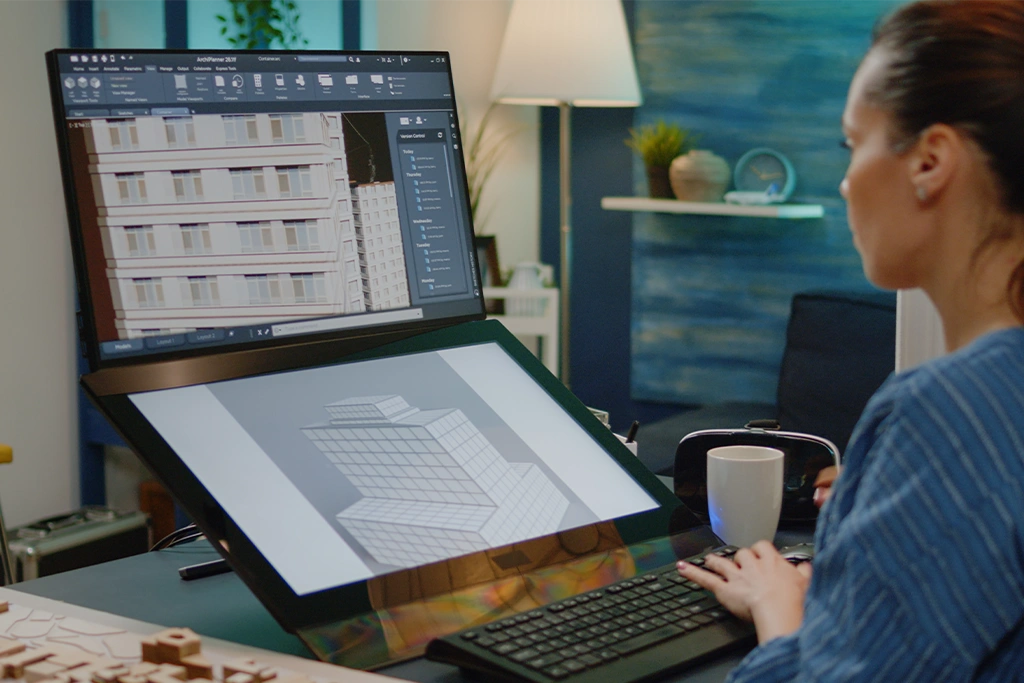
The Architecture, Engineering, and Construction (AEC) industry is rapidly moving toward smarter, data-driven project delivery, and Revit modeling remains at the center of this transformation. Today’s projects demand greater collaboration, faster design iterations, and higher accuracy than ever before. As digital construction continues to evolve, firms are adopting new technologies that make models more intelligent, connected, and construction-ready.
At Genesis Infoserve, we help AEC professionals embrace advanced BIM services that improve coordination, reduce project risks, and streamline workflows from design through construction. Modern Revit modeling is no longer limited to creating 3D models. It now supports cloud collaboration, automation, reality capture, and integrated project delivery that improve efficiency across every stage of the building lifecycle.
Why Revit Modeling Continues To Lead BIM In 2026
The shift toward digital project delivery has made this modeling the preferred platform for architects, engineers, contractors, and BIM consultants. Unlike conventional CAD drafting, Revit creates intelligent models where every building component contains geometry, specifications, quantities, and project data.
As updates are made, drawings, schedules, elevations, and sections automatically remain synchronized, helping teams eliminate repetitive work while maintaining accuracy. Autodesk’s latest Revit releases continue to improve graphics performance, cloud collaboration, model coordination, and automation capabilities to support increasingly complex AEC projects.
Trend 1: Cloud-Based Collaboration Is Becoming Standard
One of the biggest changes reshaping this modeling is cloud-first collaboration.
Project teams are no longer confined to working from a single office. Architects, structural engineers, MEP consultants, contractors, and clients often collaborate across multiple locations. Cloud-connected Revit environments allow every stakeholder to work from the latest project model while reducing version conflicts and improving communication.
Benefits include:
- Real-time model updates
- Faster design reviews
- Better document control
- Improved multidisciplinary collaboration
- Reduced coordination delays
This trend is making building information modeling more collaborative than traditional project delivery methods.
Trend 2: Automation Is Improving Design Productivity
Automation has become one of the most significant advancements in modeling for Revit.
Instead of manually performing repetitive tasks, firms increasingly use Dynamo scripts, automated documentation, model validation, and quality checks to improve productivity. Recent Revit updates also include performance improvements that make automation faster and easier to implement across projects.
Automation is helping firms:
- Reduce repetitive modelling work
- Improve documentation consistency
- Minimize manual errors
- Accelerate project delivery
- Increase overall design efficiency
Rather than replacing professionals, automation allows designers to spend more time solving engineering and design challenges.
Trend 3: Architectural Modeling Is Becoming More Intelligent
Modern modeling for architecture has evolved far beyond creating attractive 3D building visuals.
Today’s intelligent models include the following:
- Material specifications
- Building components
- Spatial relationships
- Construction sequencing
- Quantity information
- Lifecycle data
This richer information allows architects and engineers to make informed design decisions much earlier in the project.
Advanced Architectural Modeling also improves communication with owners and contractors by providing realistic visualizations before construction begins.
Trend 4: BIM Modeling Is Moving Toward Integrated Project Delivery
The future of modeling for BIM is centered on integration rather than isolated design activities.
Instead of architects, structural engineers, and MEP teams working independently, coordinated BIM environments allow every discipline to contribute to a single intelligent project model.
This approach offers several advantages:
| Feature / Aspect | Traditional Workflow | Modern BIM Workflow |
| Drawings & Models | Separate discipline drawings | Shared intelligent project model |
| Coordination | Manual coordination | Automated clash detection |
| Documentation | Multiple revisions | Synchronized documentation |
| Communication | Delayed communication | Real-time collaboration |
| Project Risk & Quality | Higher construction risk | Better project coordination |
Integrated BIM enables faster approvals, improved coordination, and smoother project execution throughout the design and construction process.
Trend 5: AI And Automation Are Enhancing Revit Modeling
Artificial intelligence is becoming an important addition to modeling rather than replacing human expertise. AI-powered tools can assist with repetitive tasks such as model validation, documentation, clash review, and code compliance, allowing project teams to focus on design quality and decision-making. Autodesk is also expanding AI-assisted capabilities across its AEC ecosystem to make BIM workflows more efficient.
Key benefits include the following:
- Faster quality assurance
- Automated documentation
- Better design consistency
- Reduced manual errors
- Improved project productivity
As firms continue adopting intelligent workflows, AI will become a natural extension of everyday modeling practices.
Trend 6: Performance Optimization Is A Bigger Priority
Large BIM projects often involve millions of model elements, making performance optimization critical. Rather than simply investing in better hardware, AEC firms are improving how they build and manage models.
Modern modeling focuses on the following:
- Lean model creation
- Better workset management
- Efficient linked models
- Optimized families
- Controlled file sizes
Autodesk’s latest releases also introduce accelerated graphics, improved coordination models, and enhanced navigation to help teams work faster on complex projects.
Trend 7: Reality Capture Is Strengthening BIM Accuracy
Laser scanning, drones, and photogrammetry are increasingly integrated into BIM workflows.
Reality capture enables project teams to collect accurate site conditions and convert them into intelligent Revit models for renovation, retrofit, and facility management projects.
This supports:
- Existing building documentation
- Renovation planning
- Scan-to-BIM workflows
- Asset management
- Reduced site measurement errors
Preparing For The Future Of Revit Modeling
As digital construction evolves, firms that invest in better workflows, automation, and skilled professionals will remain competitive.
To stay ahead, organizations should:
- Adopt cloud-based collaboration platforms.
- Standardize BIM modeling workflows across teams.
- Invest in staff training for advanced modeling techniques.
- Use automation to improve project efficiency.
- Integrate reality capture into renovation and infrastructure projects.
- Continuously improve model quality and coordination processes.
With continuous software innovation and growing adoption of building information modeling, modeling for Revit will remain one of the most valuable technologies driving smarter design and more efficient BIM construction projects.
Summary
The future of Revit modeling is being shaped by cloud collaboration, AI-assisted automation, intelligent architectural modeling, integrated workflows, and better model performance. These trends are enabling AEC professionals to deliver projects with greater speed, accuracy, and coordination while reducing project risks.
At Genesis Infoserve, we help architects, engineers, contractors, and project teams leverage advanced BIM services that support modern digital construction practices. By combining technical expertise with evolving BIM technologies, we deliver high-quality models that improve collaboration, streamline project delivery, and help clients stay competitive in an increasingly digital AEC industry.
FAQs:
1. Why is Revit Modeling important for BIM projects in 2026?
Revit modeling has evolved beyond 3D drafting into a collaborative platform that supports design, coordination, documentation, automation, and cloud-based workflows. It enables project teams to work on a single intelligent model, improving efficiency and reducing errors throughout the project lifecycle.
2. How does Revit modeling improve architectural modeling?
MEP coordination helps identify clashes, improve installation planning, reduce rework, and minimize delays caused by conflicts between building systems. Resolving these issues digitally is generally more efficient than correcting them after construction has started.
3. What are the latest Revit modeling trends shaping BIM in 2026?
Some of the biggest trends include cloud-based collaboration, AI-assisted automation, improved graphics performance, reality capture integration, enhanced interoperability through Data Exchange, and faster Dynamo workflows. These advancements help deliver more efficient building information modeling processes across complex AEC projects.
4. Can Revit Modeling support BIM construction workflows?
Yes. Revit Modeling plays a key role in BIM construction by enabling clash detection, quantity take-offs, construction documentation, scheduling support, multidisciplinary coordination, and better communication between architects, engineers, contractors, and project managers before construction begins.
5. Why should businesses partner with experienced BIM service providers?
Experienced BIM service providers bring standardized workflows, skilled Revit professionals, and quality assurance processes that improve project coordination, reduce rework, and help deliver construction-ready models on time. This enables AEC firms to handle complex projects more efficiently while maintaining high documentation quality.