
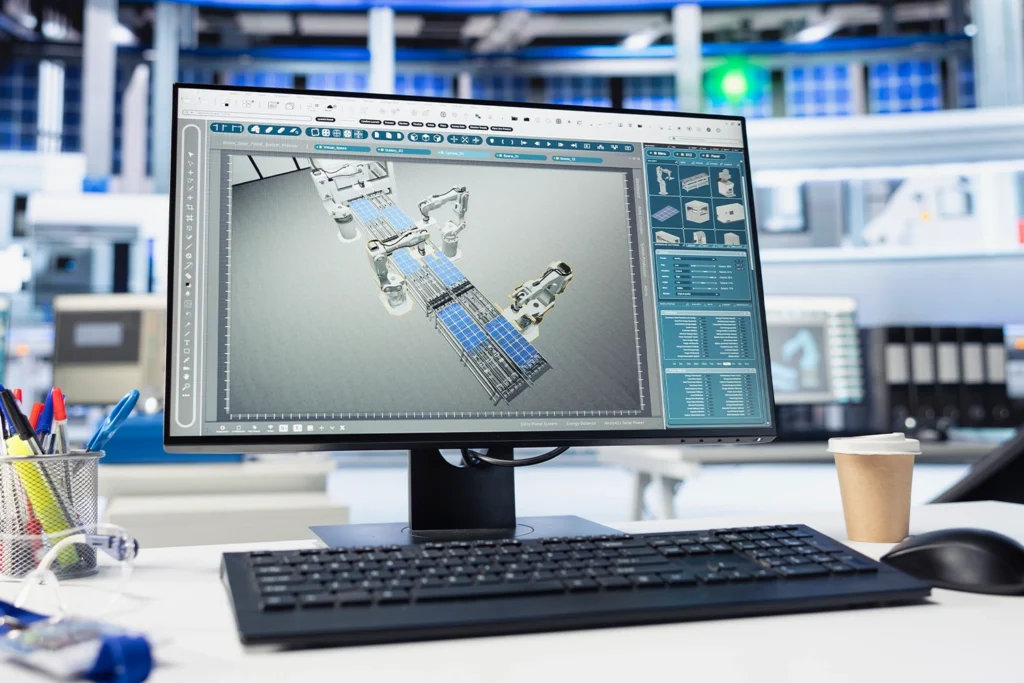
Construction has undergone a rapid transformation in recent years. In the US alone, architecture firms, engineering firms, and contractors are abandoning traditional drafting methods of creating drawings and are using more efficient, digital workflows. However, modern buildings aren’t just designed with traditional paper-based drafting; buildings are now being designed, visualised, coordinated, and executed using intelligent 3D models.
As such, Revit has become an incredibly valuable tool for architects, engineers, and construction firms within the A/E/C industry, of which Revit is now one of the most valuable software programs available for the execution of any type of building project – whether it is a commercial tower, hospital/medical facility, residential development, or infrastructure-related project.
If you’re entering the workforce in 2026 and want to pursue a career within the A/E/C industry, learning Revit is one of the most effective ways to start your career! In addition, knowing how to use Revit will help you, as an individual, understand how contemporary construction projects are developed and coordinated throughout the construction process.
Genesis Infoserve, along with the proliferation of modern digital construction workflows, demonstrates that using advanced digital design technology is imperative for the success of construction projects and the future of construction in general. Revit enables designers to use modern digital design technology at every phase of a construction project, from visualisation, drafting, and coordination through to documentation.
This beginner’s guide will provide you with an understanding of Revit, relevant employment opportunities, and how to get started learning how to use the Revit software program through step-by-step instructions.
What Is Revit?
Revit is a building design software for creating intelligent 3D building model objects. Architects, structural engineers, MEP consultants, contractors, and project coordinators use it extensively.
Rather than simply drawing lines on a 2D drawing (as is the case with traditional CAD software), Revit produces smart building model objects that contain real-world project data.
Example:
- In Revit, a wall is not simply a shape.
- A door has material and dimension data associated with it.
- An HVAC duct has airflow data associated with it.
As a result of all these capabilities, Revit plays an important role in the most recent building information modeling industries and processes. The software helps different teams to cooperate within a single project, thereby improving project accuracy and minimizing coordination errors.
Revit’s Popularity In 2026
It’s no secret that the construction industry has advanced rapidly in the past 10 years. Today’s buildings are equipped with smart technologies and systems that provide energy efficiency, automated information delivery, and complex yet well-coordinated construction layouts.
Coordinating all this, by hand, was almost impossible.
This is when the power of your Revit model comes into play!
Revit allows companies to:
- Increase the speed of design
- Increase team collaboration
- Identify design conflicts before they occur
- Provide accurate documentation
- Minimize errors within the design process
Throughout the United States, many firms are beginning to require their employees to have knowledge of Revit, as digital collaboration has become an industry requirement. Additionally, Revit can help reduce delays in your projects by improving team-to-team communications.
Getting Acquainted With The Revit Interface
The Revit interface appears overwhelming, in the beginning, to the new user. However, having a basic knowledge of how the sections are set up makes for an easier time navigating through them.
The following are the primary sections of the Revit area:
- Toolbar Ribbon
The Tool Bar Ribbon contains all the major design and modelling tools. - Project Browse
Project Browser contains all the different views, such as floor plan, section, elevation, and sheet views, as part of the overall view organization system.
- Properties Panel
The Properties Panel provides the user with the tools they need to modify dimensions, materials, settings, and components.
- Drafting Area
This is where all modeling activities happen. Learning these basic sections is the first step toward mastering Revit modelling effectively.
Your First Revit Project
Creating levels and grids is the foundation for every Revit project and will act as reference points from which you will place elements such as walls, floors, roofs, or any other component of the building.
Once this is done, you can begin adding:
- Walls
- Doors
- Windows
- Floors
- Roofs
- Furniture
The great benefit of working in Revit is that all changes made within a project will automatically reflect throughout all the views of the project. Changes made to walls in any section will be updated in plans, elevations, and schedules automatically. This streamlined approach to workflow is one of the greatest advantages of building information modeling (BIM).
In the USA designers who are just starting typically design simple, small residential projects before working on larger commercial projects.
Using Revit To Learn Architectural Design
For novices, architectural workflows are typically the simplest to begin with.
Revit is used by architects for:
- Plans of the floor
- Interior design
- Elevations
- Sections
- Three-dimensional views
- Drawings for presentations
Designers may produce realistic building layouts while upholding appropriate project coordination by using Revit modelling. Because changes can be made fast without having to redraw everything by hand, the program also increases design flexibility. Revit is now a major tool used by architecture firms all over the United States for digital collaboration and project documentation.
Comprehending Structural Workflows
Architects are not the only users of Revit. The program is also used by structural engineers for coordination and planning.
Among the structural workflow are:
- Columns
- Basis
- Beams
- Slabs
- Systems of framing
Coordination is the main benefit. Conflicts can be detected considerably earlier when structural engineers and architects collaborate. This lessens site adjustments and increases construction precision. As infrastructure projects continue growing across the USA, digital structural coordination is becoming more important every year.
Coordinating Plumbing In Tall Structures
The plumbing and drainage systems of commercial buildings are large and complicated, and their function dramatically impacts the design of all the other mechanical systems in those buildings, especially in limited spaces, such as, for example, large hospitals, hotels, airports, and high-rise towers, where manually coordinating those various systems becomes very difficult.
With the development of advanced MEP modelling, the plumbing systems can now be integrated as part of a centralised co-ordination workflow, which allows engineers to more easily assess such things as routing, pipe size, access for maintenance, and sequencing of installation.
By using the above process, the following benefits will be obtained:
- More efficient distribution of water
- More effective coordination of drainage
- More accurately routed pipes
- Improved integration of fire protection systems
- More efficient use of space
- More accurate construction planning
With the growth of urban infrastructure happening across America, complex plumbing coordination is becoming increasingly important for commercial buildings that are developed on a large scale. By coordinating all of the systems digitally in a common environment, overall efficiency improves dramatically.
Overview Of MEP Systems In Revit
The acronym for mechanical, electrical, and plumbing systems is MEP.
Every building needs these systems because they regulate:
- Air conditioning
- Airflow
- The power source
- Illumination
- Water supply
- Fire safety
MEP engineers may collaborate with architects and structural experts in the same project environment thanks to Revit. This coordinated strategy lessens installation conflicts and enhances communication.
Before construction even begins, teams can better understand how all systems interact thanks to modern Revit modelling techniques. Both time and building expenses are reduced as a result.
What Distinguishes AutoCAD From Revit?
Revit and AutoCAD are frequently compared by novices. Intelligence is the primary distinction.
Revit concentrates on intelligent project coordination, whereas AutoCAD is mostly concerned with drafting.
For instance:
- AutoCAD generates independent drawings.
- Revit generates linked models.
This implies that every modification made in Revit is automatically updated throughout the project. Building information modeling has grown in popularity for contemporary construction projects as a result. Instead of relying solely on conventional drafting software, several businesses in the USA increasingly employ Revit for comprehensive project coordination.
The Need For Revit Skills
Professionals in Revit are in high demand. Nowadays, construction firms require individuals who comprehend:
- Digital processes
- Coordination in three dimensions
- Project cooperation
- Astute documentation
- Identifying clashes
Experts who are familiar with Revit can work in:
- Architectural firms
- Building firms
- Consultancies for engineering
- Infrastructure initiatives
- Studios for interior design
Strong Revit expertise is preferred by many BIM service providers because well-coordinated digital processes greatly increase project efficiency.
Typical Errors Made By Novices
It takes time to learn Revit, and throughout practices, novices frequently make a few basic blunders.
Here are a few instances:
- Models that are too complicated
- Disregarding project templates
- Inadequate file organization
- Using inaccurate measurements
- Improperly naming views
Regular practice is the best method to get better. Speed is not the only factor in successful Revit modelling. It also involves comprehending effective coordination and workflow management.
How To Learn Revit More Quickly
Consistency is crucial if you want to become an expert in Revit in 2026.
Here are some helpful pointers for beginners:
- Practice every day
Skills can be rapidly improved with even an hour of daily practice. - Begin Small
Before advancing to more intricate commercial models, start with simpler projects. View Actual Project Instructions
Gaining an understanding of real-world procedures accelerates learning.Discover Keyboard Shortcuts
Shortcuts save a lot of time while modelling.Focus On Coordination
Try understanding how architectural, structural, and MEP systems connect together.
Many training institutes and BIM Services companies in the USA now focus heavily on collaborative learning because real-world construction depends on teamwork and coordination.
Opportunities For Employment After Learning Revit
Understanding Revit can lead to a variety of job options in the building sector.
Common occupations include:
- A BIM modeler
- Draftsman for Architecture
- Coordinator of MEP
- BIM Engineer for Structures
- Technician for Revit
- Coordinator of BIM
The construction sector in the United States is still making significant investments in digital project management and smart infrastructure. Professionals with expertise in contemporary building information modeling procedures are in high demand as a result. Long-term employment prospects in the design and construction industries can be created by learning Revit now.
Revit’s And Digital Construction’s Future
Technology in construction is developing quickly.
In the future, there will be:
- AI-powered design
- Digital twins
- Intelligent cities
- Cloud cooperation
- Buildings with IoT connectivity
- Project coordination in real time
These sophisticated workflows will continue to heavily rely on Revit. Teams are already using modern Revit modelling to enhance productivity, sustainability, and project planning in infrastructure and commercial projects. In the upcoming years, Revit expertise will become increasingly more important as more American businesses implement digital building technologies. The increasing use of BIM services across the globe further demonstrates the significance of intelligent coordination for the construction industry’s future.
Summary:
Revit has changed how modern buildings are created and coordinated. It assists design teams throughout the architectural, structural, and mechanical/electrical/plumbing disciplines to create a more intelligent digital model of the structure during the design process, resulting in improved collaboration and increased efficiency. When you embark on your journey to learn Revit in 2026 as a rookie, your education will not simply consist of Revit software training; it is about approaching digital construction from a future perspective and developing thoughts on how to coordinate projects intelligently.
As smart infrastructure and Building Information Modeling continue to grow in the United States, there are going to be numerous opportunities for architects, engineers, & contractors (AEC) professionals with Revit experience. Genesis Infoserve is committed to supporting the continued evolution of modern digital workflows and the improvement of project collaboration, accuracy, and smart construction for the future.
FAQs:
1. What is Revit used for?
Revit is used for creating intelligent 3D building models and project documentation.
It helps architects, engineers, and contractors improve coordination and accuracy.
2. Is Revit good for beginners in 2026?
Yes, Revit is widely recommended for beginners entering the construction and design industry.
It offers practical tools for learning modern digital workflows.
3. What is the difference between Revit and AutoCAD?
AutoCAD focuses mainly on drafting, while Revit supports smart 3D modeling and coordination. Revit also updates project changes automatically across all views.
4. Why is Revit important in modern construction?
Revit improves collaboration, reduces clashes, and speeds up project execution. It supports efficient planning for modern construction projects.
5. What career opportunities are available after learning Revit?
Revit skills can lead to careers in BIM modeling, architecture, MEP coordination, and construction planning. Many companies across the USA actively hire Revit professionals.