
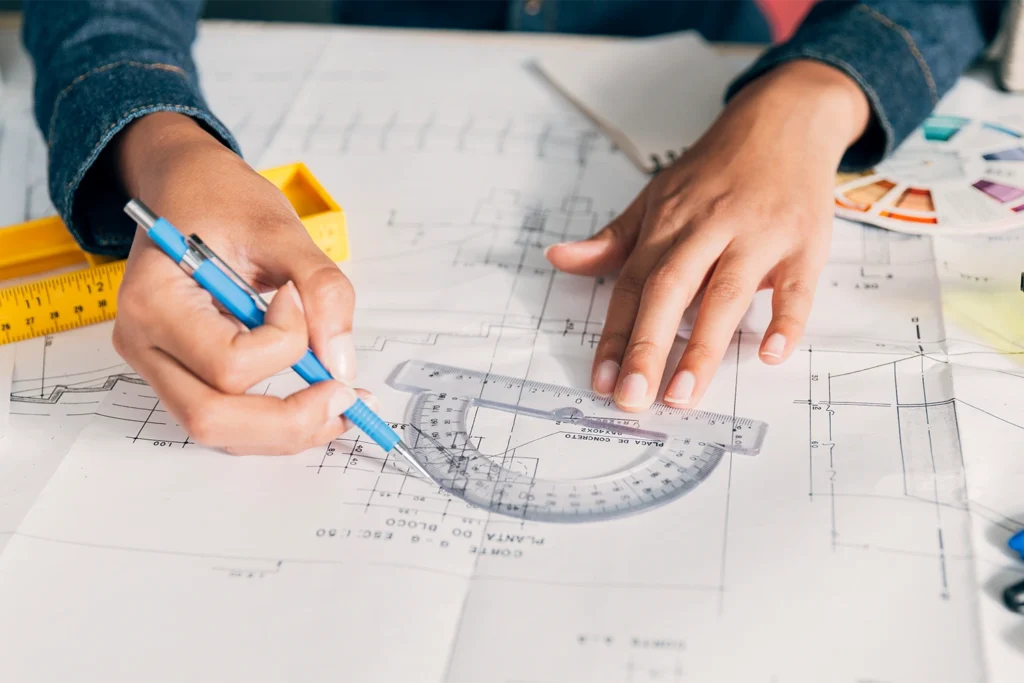
Today, all types of commercial buildings will have more than just walls, ceilings, and glass fronts. Behind every successful commercial building is an intricate web of HVAC ducts, electrical circuits, plumbing systems, fire protection systems, and automation technologies working together flawlessly within that building’s design. Each building type (corporate office high-rise, medical facility, retail shopping centre, or mixed-use commercial development) relies on MEP systems that work in such a coordinated manner that each building operates efficiently.
As commercial projects become larger in scale and more technologically complex, the opportunity for an error to occur has become less and less likely. An example would be that a minor error when coordinating ductwork and structural beams or an electrical system being routed incorrectly can cause significant delays to a project, costly redesign work, and inefficiencies during operation. Due to this, advanced drafting workflows have become one of the fundamental building blocks for modern construction project planning.
The construction industry today is not only utilizing separate 2D layouts to create a building’s structure. By using intelligent digital coordination, the production of buildings has transitioned from traditional methods to an entirely new way of building architectural projects. With advanced mechanical, electrical, and plumbing MEP modelling tools available, project teams can now use 3-D models to visualize each system in real-time, detect clashes before installation, and increase coordination throughout each phase of the project. At Genesis Infoserve, the use of modern drafting technologies allows commercial construction companies to enhance their project timeline and efficiency, increase collaborative production of their project, and develop buildings that utilize low-impact materials.
The Need For Advanced MEP Coordination In Commercial Buildings
Commercial structures function similarly to living systems. Each plumbing, electrical, and mechanical component must work in unison. Separate teams frequently worked separately in old construction settings, producing designs that required manual coordination. During execution, this procedure raised the possibility of overlapping systems, erroneous measurements, and installation conflicts. Compared to earlier building generations, modern commercial structures are far more demanding. Energy-efficient ventilation systems, automated controls, data infrastructure, centralized cooling networks, and smart lighting systems all need careful planning within constrained building space. Advanced MEP modeling becomes crucial in this situation.
Engineers today operate in integrated digital platforms that enable simultaneous coordination across all disciplines, rather than depending on disjointed drawings. This strategy enhances communication while lowering the likelihood of costly site errors. For commercial projects throughout the USA, developers are increasingly prioritizing intelligent coordination because efficient building systems directly affect operational performance, maintenance costs, and occupant comfort.
Transitioning From Traditional Drafting To Intelligent Workflows
Intelligent workflows and intelligent design have transformed how projects are executed across the entire construction industry by moving away from traditional ways of creating designs.
Traditional methods of drafting primarily included a technical representation of a building’s layout and dimensions. These drawings did help to communicate exactly what was to be built; however, they could not effectively simulate how different building systems would coordinate with each other in the real world.
Building Information Modeling (BIM) allows teams to create a data-rich environment in which every component contains intelligent information that is linked together through the overall project ecosystem.
This change has brought about several significant benefits to construction projects:
- Improved system coordination
- More accurate visualization
- Quicker design revisions
- Real-time collaboration
- Better construction sequencing
- Fewer conflicts on jobsites
Due to the increased pressure on commercial developers (in the United States) from the timeline-centric approach to project delivery, builders are now expecting to see far more advanced digital workflows than they have ever seen before. At the same time, the evolution of intelligent drafting and design capabilities has strengthened the demand for professional BIM Service Providers to perform large-scale commercial coordination projects.
The Influence Of 3D Rendering On Commercial Building Projects
One key factor in changing the way commercial construction is done using an advanced drafting process is being able to see the whole system of a building before any construction begins.
In a traditional 2D system, to understand how ductwork interacts with other components such as plumbing lines, cable trays, ceilings, and other structural members, significant interpretation of all required systems was required. Numerous coordination issues would not be seen until the installation phase of the project occurs on-site. Advanced MEP modelling eliminates much of this ambiguity through the production of three-dimensional layouts of the complete systems before any construction occurs.
By visualizing at this level, stakeholders can:
- Identify how things relate to each other spatially
- Evaluate how easily it will be to install something
- Provide for better coordination of the ceiling
- Properly locate where to place the equipment
- Discover design conflicts at an early stage
- Aid in the decision-making process
Using 3D coordination can help developers and contractors throughout the USA reduce the overall risk they have during both the design and construction phases, while also increasing the level of confidence they have in their overall projects. The combination of Building Information Modeling will further enhance the entire process by linking visual aspects of the projects with the technical specifications, schedule data, and operational information.
Avoiding Expensive Construction Clashes
Construction delays can lead to cost overruns in most cases, even small coordination errors in commercial projects can create a domino effect that affects labor schedules, procurement times, and project delivery.
One of the key benefits of advanced MEP modelling is that it allows you to identify clashes in your systems before they ever arrive at the job site. For example, if an HVAC duct is going to run through a structural beam or if electrical conduits are going to interfere with sprinkler piping, these types of issues would normally be identified when the install team is on site, forcing them to redesign parts of the project under pressure. However, with advanced digital coordination, all of this is completely changed.
Project teams now have access to clash detection tools, which allow them to model how each system interacts with all other systems throughout the entire building environment. This proactive approach helps prevent conflicts at the design stage.
Advantages consist of:
- Reduced costs for rework
- Speedier installation
- Enhanced labor efficiency
- Improved project scheduling
- Decreased material wastage
- Increased construction accuracy
As commercial developments get progressively complicated in the USA, intelligent coordination has emerged as a significant competitive benefit when competing against other construction companies. Complexity in commercial construction continues to grow, thus, there will be an increased demand for specialized BIM services supporting both coordination management and digital project workflow.
HVAC Drawings And Their Efficiency
Mechanical systems are one of the most important components in a commercial building. The way HVAC systems are coordinated can affect how comfortable a building’s occupants are and also have an effect on the facility’s long-term operating costs and sustainability goals.
If duct systems are not properly designed, airflow will not be as efficient, energy costs will be higher than necessary, and future maintenance will likely be more challenging. By using advanced MEP modelling to enhance mechanical layouts, engineers can create better spatial coordination within the building.
This digital method allows engineers to provide:
- Better air flow
- Efficient placement of equipment
- Easier access to maintain
- Increased energy efficiency
- Less conflict between systems
- Smarter coordination of ceiling systems
There are numerous commercial projects around the US that are currently developing for sustainability certification and energy efficiency regulations. By having effective mechanical coordination while developing the project, you can assist in achieving these targets. Through Building Information Modeling (BIM), engineers will be able to conduct a digital analysis of the performance of their systems prior to installing them.
Smart Planning For Electrical Systems Within Modern Businesses Is Important.
Compared to early eras when commercial buildings had simple electrical systems comprising standard electrical wiring, today’s commercial buildings require multiple electrical systems populated through elaborate electrical room infrastructure. These systems include (but are not limited to): Automated control systems, Data communications network systems, Security systems, Backup power systems, and smart systems/buildings. These systems must be coordinated in detail with one another.
Advanced MEP modeling can provide engineers with an opportunity to create the most efficient methods of creating electricity between MEP systems and the architect/structural system.
This helps improve:
- Cable management
- Equipment coordination
- Safety compliance
- Power distribution efficiency
- Automation system planning
- Long-term maintenance accessibility
Projects that constitute commercial infrastructure within the United States are incorporating intelligent building technologies into their projects, and, as a result, advanced electrical drafting is necessary now more than ever. These technologies require professionals providing BIM services to assist project teams in effectively managing the increasingly complex requirements for digital coordination of these projects.
Coordinating Plumbing In Tall Structures
The plumbing and drainage systems of commercial buildings are large and complicated, and their function dramatically impacts the design of all the other mechanical systems in those buildings, especially in limited spaces, such as, for example, large hospitals, hotels, airports, and high-rise towers, where manually coordinating those various systems becomes very difficult.
With the development of advanced MEP modelling, the plumbing systems can now be integrated as part of a centralised co-ordination workflow, which allows engineers to more easily assess such things as routing, pipe size, access for maintenance, and sequencing of installation.
By using the above process, the following benefits will be obtained:
- More efficient distribution of water
- More effective coordination of drainage
- More accurately routed pipes
- Improved integration of fire protection systems
- More efficient use of space
- More accurate construction planning
With the growth of urban infrastructure happening across America, complex plumbing coordination is becoming increasingly important for commercial buildings that are developed on a large scale. By coordinating all of the systems digitally in a common environment, overall efficiency improves dramatically.
Improved Collaboration For More Speedy Construction
A commercial construction project includes many players who work together to meet rigid deadlines. Architects, engineers, consultants, contractors, suppliers, and project managers must all have timely and accurate access to project data throughout the life of a project.
Working from different locations creates problems with communication and coordination.
Innovative drafting environments foster cooperation by enabling teams to work simultaneously in a single digital space, where changes can be viewed instantaneously.
Collaborative workflows provide benefits & enhance:
- Communication between teams
- Transparency of projects
- Management of revisions
- Accuracy of documentation
- Planning for construction
- Workflow efficiencies
More construction companies throughout the United States are starting to utilize cloud-based collaboration systems as a means of increasing coordination between teams in the office and those in the field. As more digital project managers enter the construction environment, the use of building information modelling within collaborative environments continues to grow and be established as an industry standard.
The Future Of MEP Drafting In Commercial Construction
Technology is rapidly changing how we do commercial construction. Smart cities, AI-based infrastructure systems, Internet of Things-connected buildings, and digital twin technologies are transforming commercial construction into a much more intelligent project environment.
Advanced MEP modelling will continue to play an important role in providing support for future-ready infrastructure systems.
Several new trends are influencing commercial construction:
- Optimisation of designs using AI
- Automated building management systems
- Predictive maintenance solution
- Integration of digital twins
- Real-time analytics for buildings
- Sustainable infrastructure
Commercial property developers across the US are already implementing intelligent technologies that improve the performance of buildings and allow for longer-term operational effectiveness. As the industry continues to change, the use of digital coordination workflow will be more significant than ever before regarding complex systems.
Summary
When you build a commercial building, it requires a lot more than just drawings to successfully construct a building. It will use advanced coordination, integration of systems efficiently, and accurate construction planning to meet the high levels of operations and sustainability that are now expected. By using more advanced drafting workflows, the construction industry will see fewer errors in construction, more collaborative efforts, and much more efficiently delivered results for all their projects, from concept through to execution. Intelligent environments will enhance all types of commercial infrastructure to make sure that everything, from HVAC systems, electric systems, plumbing systems, and fire-protection systems, is designed and constructed more efficiently throughout the USA.
By using an advanced MEP model, in conjunction with the integration in digital processes, the entire construction team can work together to deliver a higher level of efficiency during the project, with the knowledge that the risk of project failure or mistakes will be lessened, while at the same time, creating better long-term performance for the building. Genesis Infoserve will continue to assist in the transformation of the construction industry by providing advanced systems for commercial projects to assist in completing their projects faster, smarter, and more effectively.
FAQs:
1. What is Advanced MEP coordination in commercial construction?
Advanced MEP coordination helps integrate mechanical, electrical, and plumbing systems within one digital environment. It improves accuracy, reduces clashes, and supports smoother project execution.
2. Why is MEP modelling important for commercial buildings?
MEP modelling helps engineers visualize building systems before construction begins.
This reduces installation errors, delays, and costly redesign work.
3. How does 3D visualization improve commercial construction projects?
3D visualization allows teams to understand system layouts and detect conflicts early.
It improves coordination, planning, and overall construction efficiency.
4. What are the benefits of using BIM in MEP drafting?
BIM improves collaboration, project coordination, and real-time design updates.
It also helps reduce rework and supports better decision-making during construction.
5. Why are commercial projects in the USA adopting advanced MEP workflows?
Commercial projects in the USA require smarter coordination due to increasing building complexity. Advanced digital workflows help improve efficiency, sustainability, and long-term building performance.