
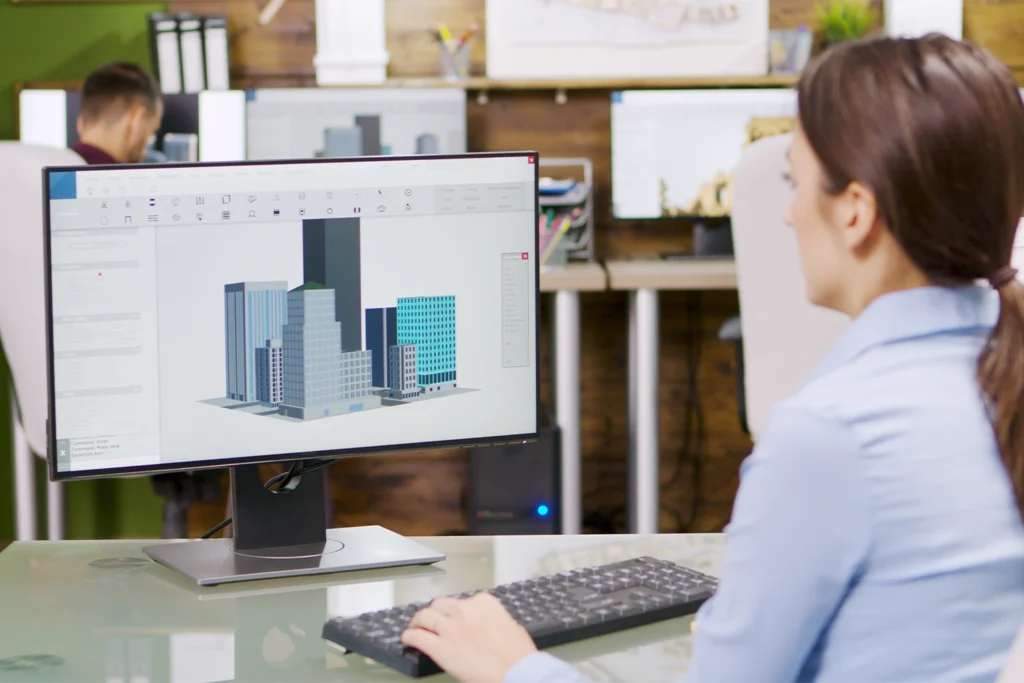
The architecture, engineering, and construction industry has witnessed a massive technological transformation over the past few decades. What once depended entirely on paper sketches, manual calculations, and traditional drafting boards has evolved into intelligent digital ecosystems capable of predicting, analyzing, and optimizing every stage of a project lifecycle. At the center of this transformation stands Building Information Modeling, a technology that has completely reshaped the way modern infrastructure and construction projects are designed and executed. In the early days, construction drawings were limited to simple 2D layouts that only represented lines, dimensions, and symbols. These drawings required multiple revisions, coordination between different teams was difficult, and errors were often discovered only after construction had already started. Today, the industry operates with advanced digital workflows that provide real-time visualization, cost estimation, facility management, sustainability analysis, and lifecycle planning.
Genesis Infoserve‘s evolution represents more than just software advancement. It reflects the future of digital construction where intelligent project coordination, collaboration, and accuracy define successful infrastructure development across the USA and global markets. The journey from 2D drafting to 7D BIM showcases how technology has continuously improved efficiency, reduced project risks, and enhanced collaboration within the construction industry. Understanding this evolution helps businesses recognize why modern digital workflows are becoming essential for competitive and sustainable project delivery.
The Era Of Traditional 2D Drafting
Before digital workflows became mainstream, the construction industry relied heavily on manual drafting methods. Engineers and architects prepared floor plans, elevations, and technical drawings using pencils, rulers, and drafting tables. Every change required redrawing large portions of the design, making the process time-consuming and prone to human error. The introduction of computer-aided drafting software brought the first major digital revolution. 2D drafting enabled professionals to create drawings faster and more accurately compared to manual methods. However, these drawings still lacked intelligence and coordination capabilities. Although 2D drafting improved documentation speed, several limitations continued to affect project efficiency:
- Lack of real-time collaboration
- Difficulty in identifying clashes between systems
- Limited visualization capabilities
- Frequent design inconsistencies
- Repetitive revisions and documentation updates
- Increased risk of construction delays
Large-scale projects across the USA often faced communication gaps because architectural, structural, and MEP teams worked separately with disconnected drawing sets. As projects became more complex, the need for integrated digital workflows started becoming increasingly important. This demand eventually led to the rise of intelligent digital modeling systems that transformed the future of BIM construction.
What Is 3D BIM?
The use of 3D models as the basis of a new workflow to design buildings marked a watershed development in the building industry. For the first time, there was a means to design using intelligent 3-dimensional models versus 2-dimensional drawings, and to have all the real-time information relevant to the project documented in the project’s model as well.
The introduction of Building Information Modelling (BIM) demonstrates how the use of these models can help create collaboration among all participants in the building process by providing access to the information in each component of the model that makes up the project. Consequently, the walls, doors, pipes, electrical systems, and structural elements were able to be modeled more intelligently and could be considered to be intelligent objects containing measurable and editable attribute information.
The implementation of a 3D workflow has provided multiple benefits:
- Improved ability to visualize projects
- Improved ability to coordinate design
- Improved communication among all parties involved in the construction project
- Enhanced speed of decision-making
- Reduced design conflicts
- Decreased expenses associated with the materials used in building structures
Architects and engineers benefited from Building Information Modelling (BIM) by improving their approach to design planning through greater collaboration and the early identification of design conflicts, thus reducing construction inaccuracies or errors made on-site.
The USA construction industry saw the added benefits of digitally coordinating various design components, particularly within the context of sophisticated commercial buildings, healthcare facilities, airports, or civil engineering construction. As such, BIM construction became increasingly popularised by owners/developers, construction consultants, or general contractors. Consequently, companies began to provide specialised BIM Services to assist with design development efforts and to promote better project management through more efficient use of technology, as well as to create digitally accessible document files of BIM-related information.
The History Of 4D BIM (Time in Construction)
As digital processes progressed, so did the industry’s progression from visualisations and coordination.
The next evolution introduced time-dependent project scheduling to the model and was known as 4D Building Information Modelling (4D BIM), adding scheduling data to the 3D model, allowing teams to visualise the construction activities over a time frame, which allowed for a transformation of project planning. Stakeholders were able to see how the various phases of the project would be executed in the sequence they were going to be executed and their completion date. Teams were no longer limited to Gantt charts and static schedule-based project planning, they could now simulate the project’s timeline directly within the model.
The benefits of 4D workflows are as follows:
- Improved sequencing of construction processes,
- Enhanced site logistics planning,
- Better allocation of resources,
- Fewer scheduling conflicts,
- More transparency within the project,
- Improved communication with all project stakeholders.
The significant value of the advancement for large BIM construction projects in the US included improvements in project coordination, reduction in delays, and increased collaboration among contractors, suppliers, and project managers. Improved risk analysis due to the addition of scheduling data makes it easier for groups to determine where they may encounter bottlenecks before carrying out their plans. Project complexity’s continued growth led to the understanding that productivity and overall performance will be increased tremendously through the use of intelligent scheduling, in conjunction with BIM modelling.
Cost Intelligence In BIM’s Evolution Into 5D
While 4D BIM involved the integration of time in its functions, the next development took on integrated digital workflows for cost estimation and budgeting. 5D BIM connects building quantities and material data with cost estimating systems, enabling output funding and valuation. This allows for real-time “cost” analysis as a design develops.
Before digital systems, traditional workflows relied on separate manual calculations and spreadsheets to estimate project budgets. A change made in the design may cause the budget alterations themselves to consume so much time. Rapid changes to any cost-related data are automatically made when changes are made within a modern digital model. More thorough control over finances can therefore be maintained throughout the life of the project.
The key advantages of 5D workflows include:
- Correct quantum takeoffs
- Faster budgeting processes
- Improved procurement planning
- Reductions in financial risks
- Increase in project forecasting
- Better cost transparency
The utilization of cost analysis was essential in advancing the BIM construction process, especially regarding infrastructure and commercial projects being constructed throughout the United States. As a result, more developers and contractors began to use BIM service providers to aid with their budgeting processes without sacrificing design or production efficiency. Finally, this stage of the BIM workflow enabled organizations to minimize waste and increase profitability by making data-based decisions.
Understanding 6D BIM: Sustainability And Facility Performance
The industry’s growing focus on sustainability and operational efficiency led to the next major evolution in digital construction workflows. 6D BIM introduced sustainability analysis and lifecycle performance evaluation into project modeling environments. This stage enabled teams to analyze building performance before construction even started. By integrating energy consumption data, environmental analysis, and maintenance planning into digital models, project teams could make smarter long-term decisions.
Important capabilities of 6D workflows include:
- Energy performance analysis
- Sustainable material evaluation
- Carbon footprint assessment
- Lifecycle cost analysis
- Facility optimization
- Long-term operational planning
Increasingly, building information modeling (BIM) has become a vital part of the Green building and sustainable infrastructure development movement that has developed throughout America.
Environmental responsibility has increasingly become a priority for government entities, developer entities, and construction entities, and has caused digital sustainability analysis to become a necessary part of modern construction planning.
At this point, BIM modelling goes beyond just being used for design coordination; it has become a strategic tool to create better operational performance, enhance sustainability, and improve long-term asset management.
The Evolution Of 7D BIM
The latest evolution in digital workflows for the construction industry is 7D BIM, which focuses on managing facilities and optimizing the life cycle of assets.
7D BIM goes beyond just the creation of a design and construction project and supports the operational management of an entire building during its entire life cycle. In this phase of the building life cycle, there is an integration of maintenance schedules, equipment data, warranty information, operation manuals, and facility management systems into one single digital environment. This means that instead of using different pieces of paper and different maintenance records that are not connected, a facility manager will have access to all building information within one intelligent model.
The benefits of 7D BIM include:
- More efficient management for 60 years. old facilities
- Simplified tracking of maintenance
- Increased speed of equipment servicing
- Increased operational effectiveness
- Reduced total cost over the life cycle of the asset
- Improved management of all forms of hard and soft assets
More and more BIM construction projects are being created using 7D workflows in order to ensure that buildings have high levels of performance for many years after completion. The development and use of advanced digital asset management strategies utilizing intelligent models are being incorporated into healthcare facilities, airports, schools, factories, and smart commercial structures across the US. Building information modeling has progressed from being a basic drafting tool to being able to manage the entire life of a construction project through a change to 7D workflows.
BIM’s Effect On Collaborative Work
Collaboration within the digital construction workflow has improved greatly.
In traditional project environments, collaboration was often compromised due to a lack of communication and many different disciplines operating independently. For example, architect’s drawings, structural engineer’s drawings, contractor’s drawings, and MEP drawings were typically all done with different sets of drawings. With modern BIM construction workflows, everyone involved in the project shares a common digital environment.
Working together in this common environment has significantly improved:
- Design accuracy
- Transparency of the project
- Efficiency of coordination
- Communication between disciplines
- Speed of approvals
- Reduction of rework and wasted effort.
Tools for teamwork from afar, like “cloud computing,” have enhanced and improved project management for teams around the world, including those working on projects throughout America. An increase in public demand for digital workflow solutions has contributed to a corresponding increase in the demand for professional Building Information Modeling (BIM) services that can offer project management functionalities, such as coordinating teams’ work, detecting conflicts, producing documentation/evidence of work performed, and tracking/controlling project data.
As building designs continue to get more complicated, it is becoming increasingly important to create opportunities for digital collaboration among project team members rather than just wanting to have the capabilities.
BIM’S Contribution To Smart Cities & The Infrastructure Of The Future
The future of construction is largely dependent on smart infrastructure, digital twin technologies, and smart city planning. There is significant investment in smart buildings, as well as the connectivity between infrastructure systems, from both public and private developers around the globe. Digital workflows are facilitating the development of everything from transportation networks to healthcare systems to ensure sustainability within urban environments.
BIM modelling provides the foundation for delivering some of the best and most advanced ecosystems supporting infrastructure.
Some examples of future-oriented uses:
- Smart city planning
- Digital twin technology
- Smart infrastructure monitoring
- Internet of Things (IoT) enabled building systems
- Predictive maintenance
- Artificial Intelligence (AI) for the purposeful management of facilities.
With ongoing advancements in technological developments, Building Information Modeling (BIM) will increasingly incorporate automated processes, AI technologies, and real-time analytics in operational practices.
In addition, there is noticeable growth in the implementation of intelligent infrastructure systems by the construction industry within the USA, focused on enhancing efficiency as well as sustainability and developing urban areas for further growth. Companies that choose to invest now in digital transformation will have a significant competitive advantage when it comes time for future construction.
Businesses Are Beginning To Invest In Advanced BIM Solutions
The challenge of modern projects is the growth of digital transformation in the construction sector. Due to difficulties in today’s project environment, companies have begun to utilize advanced workflows that offer improvements to their projects:
- Faster delivery of projects
- Better coordination of projects
- Reduced the risk of construction
- Improved accuracy
- More enhanced visualization
- Better resource management
- More long-term value
Professional BIM services help businesses streamline workflow while ensuring better collaboration between design, engineering, and construction teams. Whether developing commercial towers, industrial facilities, healthcare campuses, or infrastructure projects, organizations now recognize that intelligent digital workflows are critical for long-term project success. The shift toward integrated BIM construction environments is also helping businesses improve client confidence through greater transparency and predictable project outcomes.
Summary
The journey from basic 2D drafting to advanced 7D BIM reflects one of the most significant technological evolutions in the modern construction industry. What started as simple digital drafting has now transformed into intelligent lifecycle management systems capable of supporting design, coordination, scheduling, budgeting, sustainability, and facility operations. Today, digital construction workflows are reshaping how projects are designed, executed, and maintained across the USA and global markets. From enhanced visualization and clash detection to long-term facility management, modern technologies continue to improve efficiency, reduce risks, and optimize project performance. As the demand for smarter infrastructure and sustainable development continues to grow, the importance of intelligent digital workflow will only increase. Companies that embrace innovation and advanced modeling strategies will lead the future of construction.
Genesis Infoserve continues to support this digital transformation by helping businesses adopt modern technologies that improve project coordination, collaboration, and operational efficiency in an increasingly competitive construction landscape.
FAQs:
1. What is the difference between 2D drafting and BIM?
2D drafting creates flat drawings, while BIM develops intelligent 3D models with detailed project data. It improves coordination, visualization, and project accuracy.
2. Why is BIM important in modern construction projects?
BIM helps reduce errors, improve collaboration, and streamline project execution. It also supports better planning, scheduling, and cost management.
3. What does 7D BIM mean?
7D BIM focuses on facility management and long-term building maintenance. It stores operational data, equipment details, and maintenance information in one model.
4. How does BIM improve project coordination?
BIM allows all project teams to work within a shared digital environment. This helps identify clashes early and improves communication between stakeholders.
5. Which industries benefit the most from BIM technology?
Industries like commercial construction, healthcare, infrastructure, and industrial projects benefit greatly from BIM. It supports efficient planning, execution, and lifecycle management across sectors.